
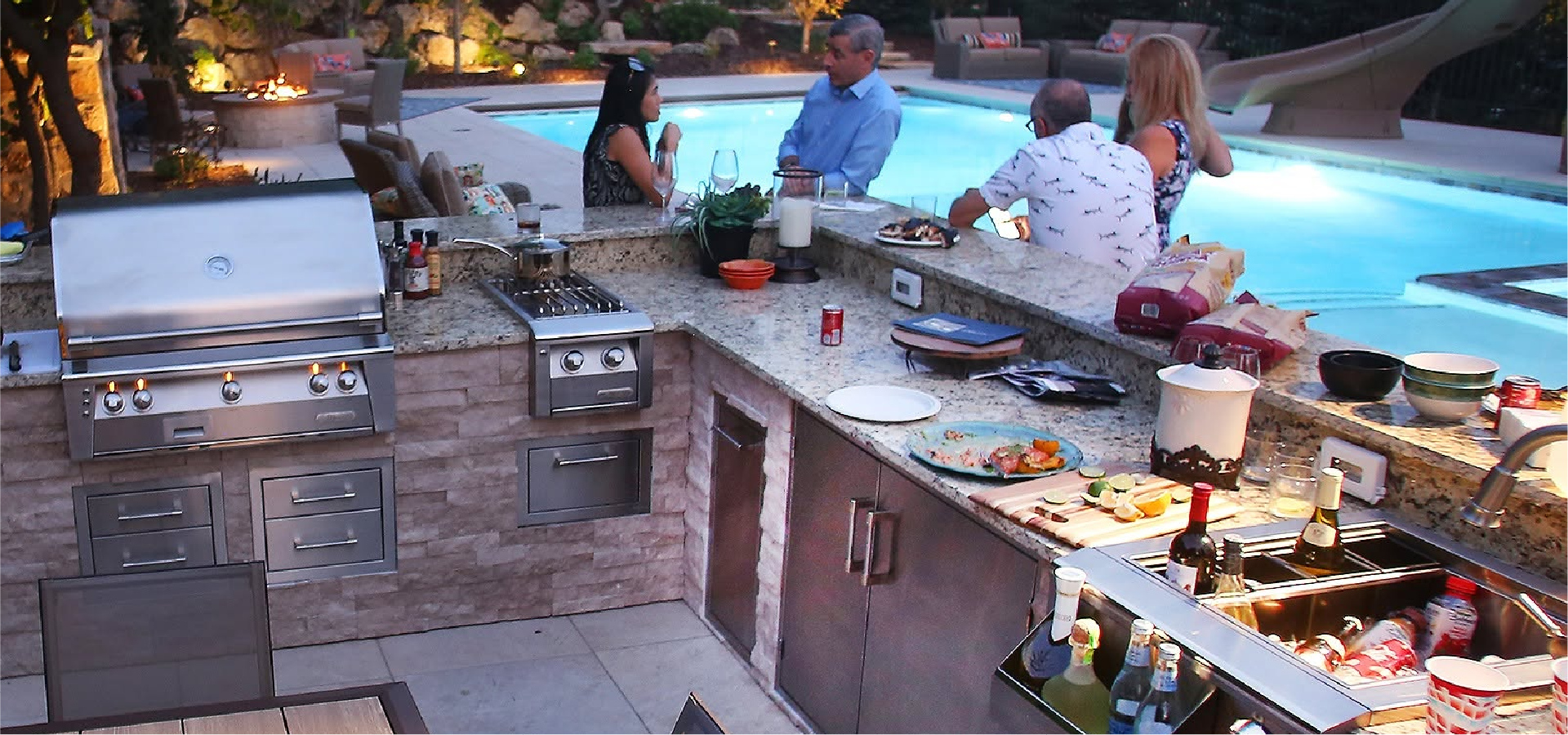
Folks ask me this all the time. “Pete, I’ve already got a grill. Why would I need a whole outdoor kitchen?”
Well, that deserves a clear answer. After building outdoor kitchens across Cypress, Katy, The Woodlands, and the greater Houston area, I can tell you the difference between the two is bigger than most people think.
Once you see what sets them apart, you’ll know which one you need.
Key Takeaways
- A grill is a single appliance. A full outdoor kitchen is a planned space where you can cook, prep, clean, store, and serve without going back inside.
- What makes a kitchen “true” is the layout, the utilities, and materials built for Texas weather.
- A simple grill setup can be the first step toward a full kitchen if you plan it that way from the start.
- If you host often or keep running inside mid-cook, you’ve likely outgrown a grill.
The Back-and-Forth Problem
One common problem I see is that you invest in a beautiful, high-end grill for your outdoor space, but when the party starts, you keep running back into the kitchen for tongs, a cutting board, a platter, or even to wash your hands.
By the end of the night, you’ve cooked a great meal, but you’ve spent half of it in the hallway instead of with your guests.
That’s when most people realize a grill alone isn’t enough. The real issue is everything around it.
What a Grill Gives You
A good grill does one job, and it does it well. It cooks. Whether it’s gas, charcoal, pellet, or a smoker, it’s the tool that heats your food.
For many folks, that’s plenty. If you grill a few times a month for your family and don’t mind stepping inside for the rest, a quality freestanding grill will serve you well for years.
What Makes a True Outdoor Kitchen
An outdoor kitchen works like the one inside your house. I design every build around four zones:
- The hot zone: The centerpiece, usually a built-in grill from a name like Twin Eagles or Alfresco, backed up by a side burner, griddle, wood-fired pizza oven, or smoker.
- The cold zone: An outdoor refrigerator, cooler, or ice maker to keep drinks and ingredients cold.
- The wet zone: A sink for washing, rinsing, and general cleaning.
- The prep and serving zone: Counter space for cooking and serving, plus barstools for guests.
When you lay out those four zones right, you can cook an entire meal without ever leaving the patio.
What’s Behind It That You Don’t See
An outdoor kitchen isn’t just appliances lined up on a counter. It’s built like part of your home:
- Utilities: Gas, electric, and water lines run to where they’re needed.
- Built-in appliances: Grills made to sit inside an island, often with an insulated jacket to protect the surrounding structure.
- Weather-ready materials: Cabinets and counters that stand up to Houston heat, humidity, and summer storms.
- Cover and lighting: So you can cook comfortably in July and keep the evening going after dark.
- A real foundation: So the whole thing stays level and solid for years.
That’s why my team handles everything, start to finish. Design, appliance selection, build-out, installation, and the care that comes after.
Where Your Smoker Fits In
For many, the smoker is the heart of the backyard. In a basic setup, it sits off to the side. In an outdoor kitchen, it becomes part of the design.
Custom smoker pits are my specialty, and I build each one here in Texas. When I design a kitchen around a smoker, I think about airflow, where the smoke goes, how you’ll load wood, and where you’ll rest your brisket. Those details turn a nice patio into a place built for real barbecue.
The Setup in Between
You don’t need to build the entire outdoor kitchen all at once. Start with a built-in grill, a small kitchen island, counter space, and storage. We can even plan for future additions such as a refrigerator, sink, or smoker, so you can add them later without rebuilding the whole setup.
How to Know You’re Ready
You’ve probably outgrown a grill if:
- You host friends and family more than a few times a season
- You spend more time walking inside than standing at the grill
- You want to cook more than one thing at once
- You want your backyard to feel like a true extension of your home
Ask Pete
If you’re not sure what’s right for you, that’s exactly the kind of question I love to answer. After twenty-plus years in the grill and outdoor kitchen business here in Texas, I can usually tell pretty quickly what’ll suit you best. Tell me how you cook and entertain, and I’ll help you find the right setup for your space.
FAQs
Can I build my current freestanding grill into an outdoor kitchen island?
Usually not, since freestanding grills aren’t designed or rated to be enclosed in an island.
Should my outdoor kitchen run on natural gas or propane?
Natural gas is often more convenient if your home already has a line, while propane works well where it doesn’t.
Can an outdoor kitchen be built on my existing patio?
Sometimes, but it depends on whether the slab can support the weight, so consult a professional first.
Is it possible to use indoor appliances in an outdoor kitchen?
No, indoor appliances aren’t built for outdoor heat and humidity, and using them outside can void the warranty.
How much space does an outdoor kitchen require?
A compact patio can fit a small island, while a full kitchen needs more room for cooking, prep, and seating.